
Sleek & Sheek
Atelier Nº2 · Porto

No stitches.
No lines under silk.

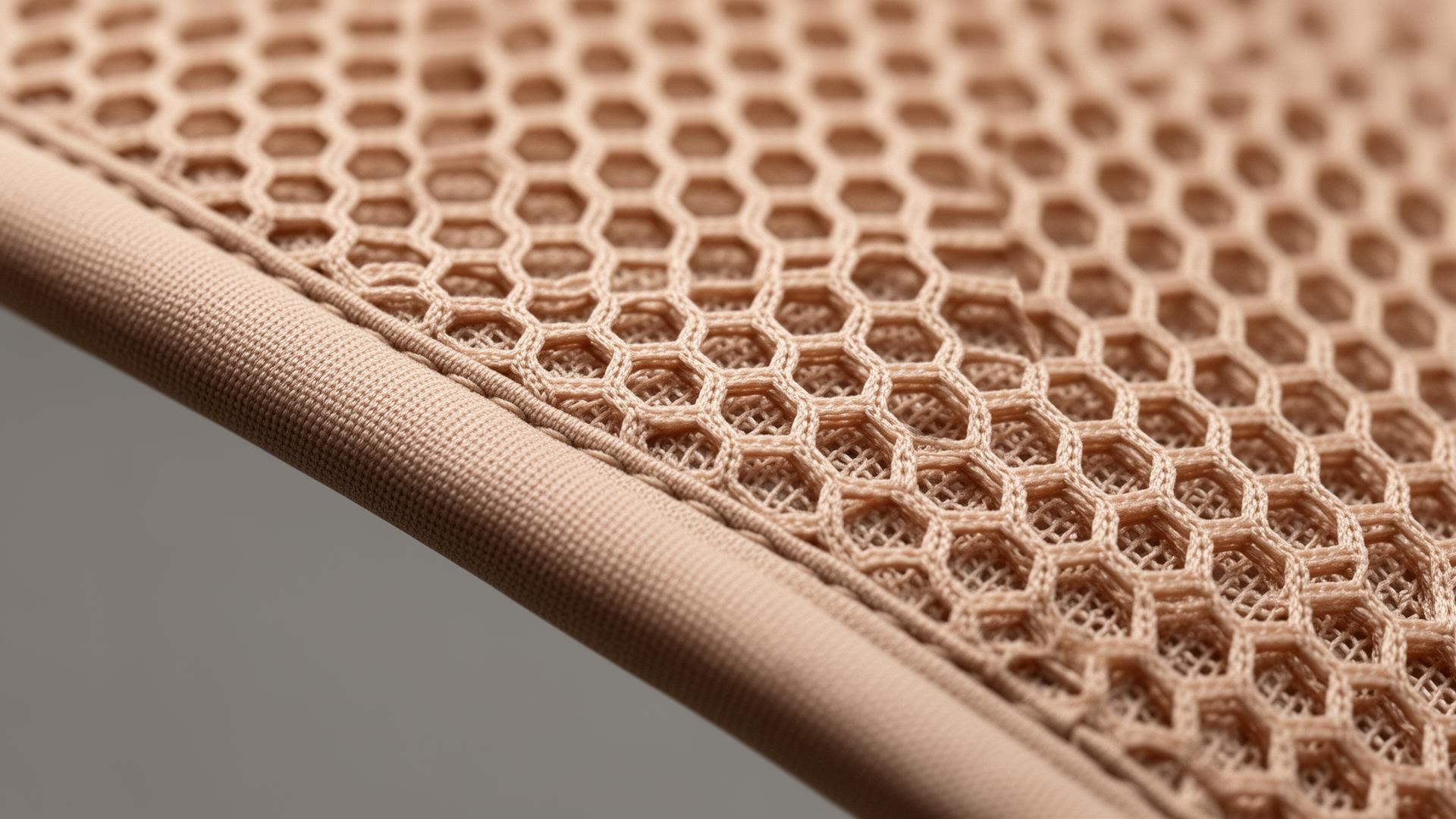
When I launched our first bodysuit in 2023, the women wearing it told me the same thing in twelve different ways: they could still see the seam under their thinnest dress. So I went back to Porto and stopped sewing. Edge- bonded mesh is what came out of that — two layers of ultra-fine knit sealed at exactly 142°C. The edge is flat. The mesh keeps breathing. Your outline stays your own.

This is the long version. The honest one.

Mira A., Founder of Sleek n Sheek

Mira A.

Founder · Sleek n Sheek

Edge-bonded mesh draped over a stone form, Porto studio
Bonded Mesh Nº2Sealed at 142°C

The bond, in facts

142°C

The exact temperature the polyurethane film fuses, not melts

0.4 mm

Edge thickness — thinner than the seam on your t-shirt

0

Stitches across every bonded panel. No needle, no perforation

1.8 sec

Press time per centimetre. Faster ruins the bond

+47%

Stretch recovery vs. a conventional flatlock seam

100+

Wash cycles before the bond shows any visible fatigue

82 g/m²

Lighter than a sheer stocking. You forget it’s there

92%

Open mesh area — air moves through, sweat moves out

There is a moment, somewhere around 5 p.m., when a woman catches her reflection in a window and sees the outline of her shapewear under her dress. The thigh band. The bust seam. The little ladder where the panel meets the leg. I grew up watching my mother find that outline in shop windows on Avenida da Liberdade. I never forgot it.

For decades, that outline has been treated as the cost of shaping. It isn’t. It’s the cost of a stitch — a tiny bulge of folded fabric, two needle perforations, and a hem that catches light differently to the cloth around it. In every conventional shapewear panel, the outline you see is a seam announcing itself.

I refused to keep designing around that. So I asked the opposite question: what if the panel had no edge at all?

A great undergarment is one nobody sees. Including her.
Mira A., Founder

The answer turned out to live in aerospace. Edge-bonding — the technique used to fuse heat-resistant films inside spacesuit liners — had quietly migrated into high-performance swimwear, and from there into the very lightest activewear. It had never been built for the body of a woman wearing a slip dress at a wedding. I thought it should be.
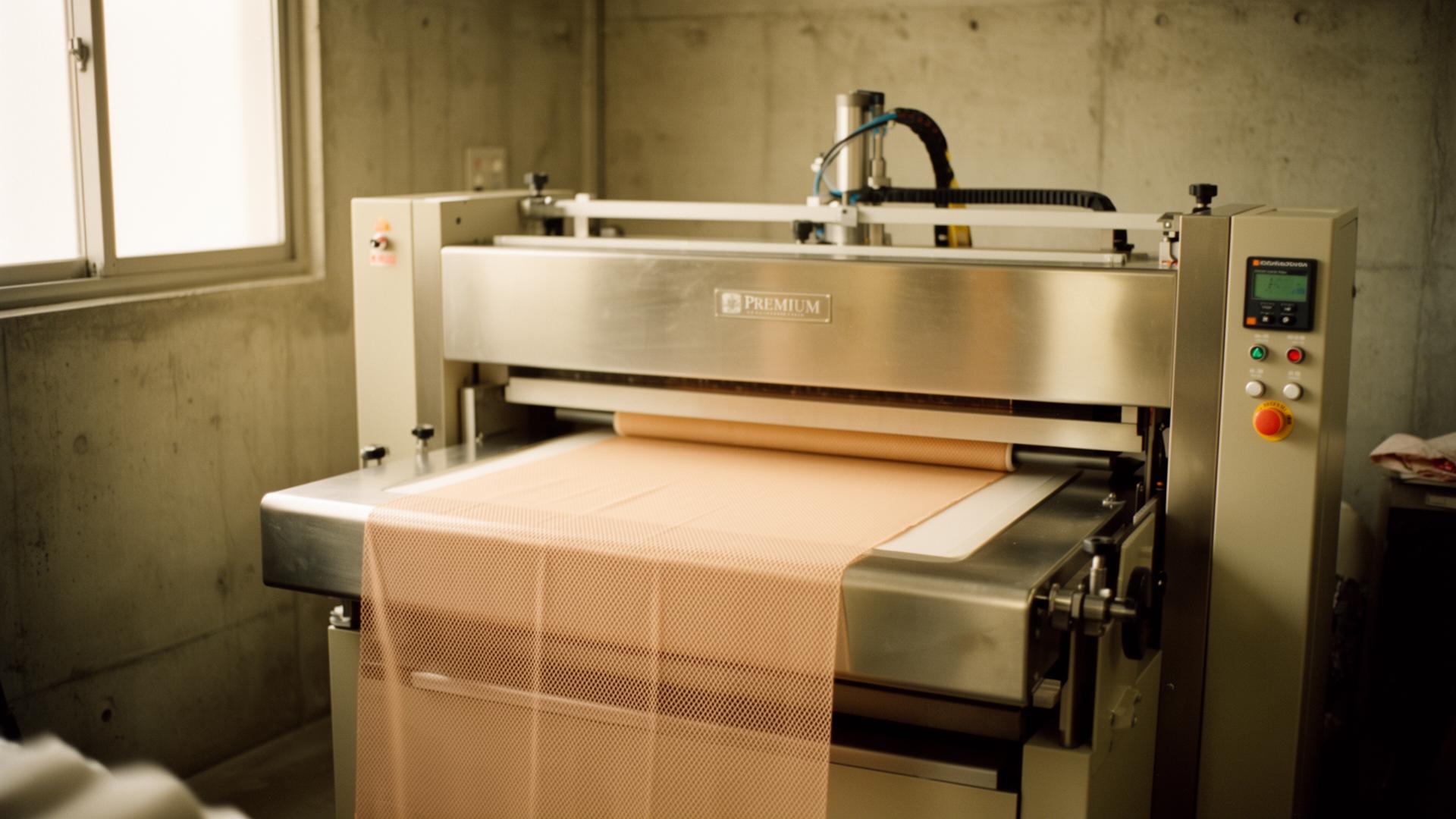
Ultrasonic bonding press at the Porto atelier
Plate · 04135mm · Kodak Portra

Press Nº1

The original ultrasonic bonder at the Porto atelier. Calibrated to 1.8 seconds, 142 degrees. Nothing else has touched it since I signed off on it.

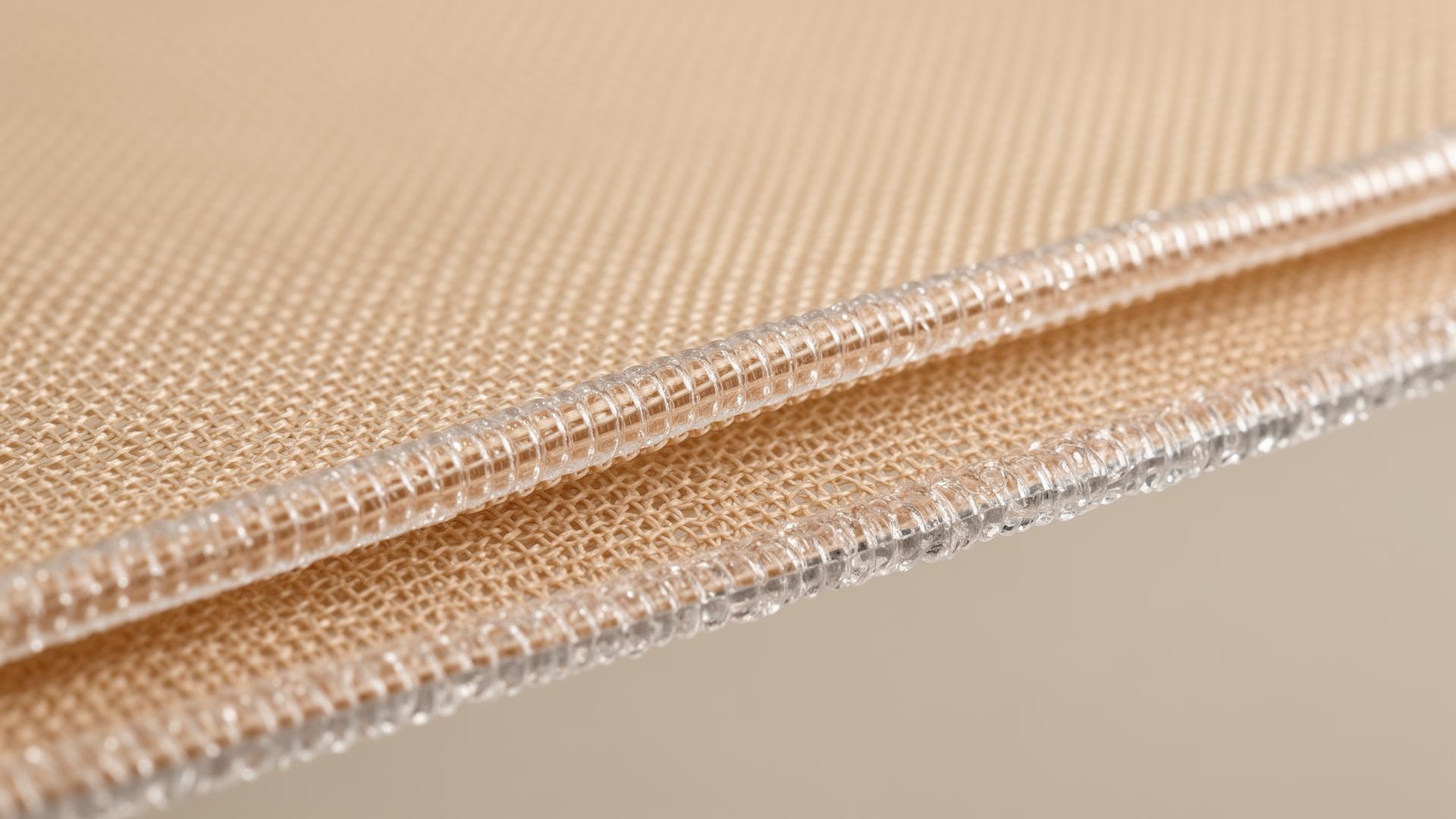
Between two layers of our ultra-fine mesh, a 0.06 mm strip of thermoplastic polyurethane film is laid down by hand. The sandwich is pressed for exactly 1.8 seconds at 142 degrees Celsius and four bars of pressure. The film melts into the mesh, fuses the two layers, and cools to a bond that is stronger than the thread that used to hold them together.

Everything in that paragraph is non-negotiable. A degree colder and the bond is weak. A degree warmer and the mesh puckers. Half a second longer and the film bleeds outward and leaves a halo on the fabric. I rejected three press machines before I found one I could calibrate to a window that narrow, every shift, every day.

Macro view of an edge-bonded seam — two layers of mesh fused with a clear bond lineMagnification · 30×
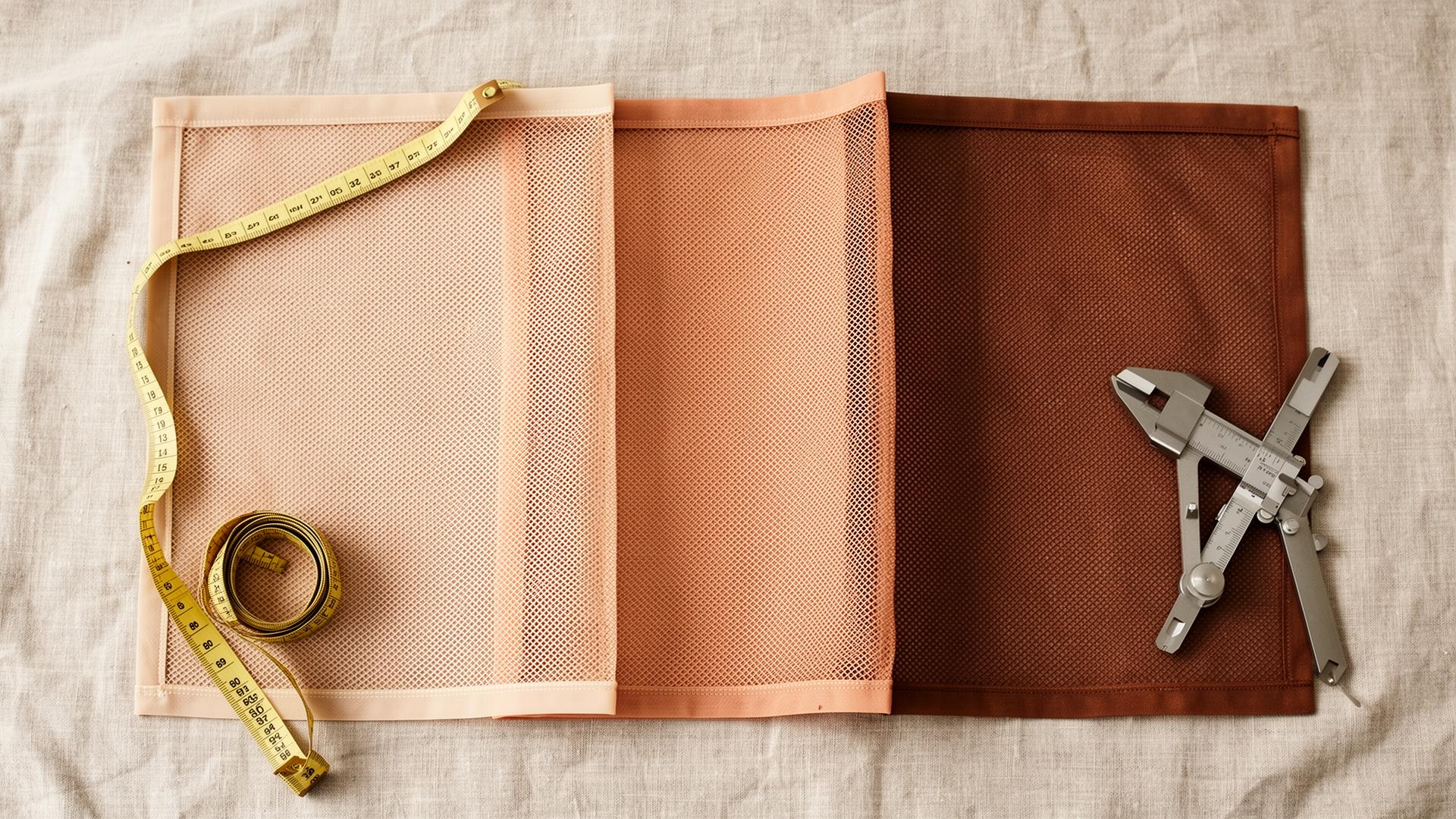
Three weights of edge-bonded mesh — Whisper, Daily, SculptThree tones
A bond is a promise the fabric makes to itself.
Mira A., Founder

The other thing the bond does, quietly, is preserve the stretch. A stitched seam interrupts the elastic recovery of the mesh at every needle hole. A bonded seam doesn’t. The fabric stretches and snaps back as if it were a single continuous piece — because, structurally, it now is.

What the bond gives her

Three things
a stitch can’t.

Invisible under everything.

The edge sits flush at 0.4 mm — thinner than the seam on your t-shirt. There is no panel ladder under a slip dress, no thigh band catching the light, no waistband telegraphing itself through silk.

Breathes like the mesh it is.

92% open mesh area means air moves through the fabric where a sewn seam would otherwise close it off. The bond runs only at the edge — the body of the panel stays porous from the bust to the hem.

Holds for a hundred washes.

The polyurethane film is rated to outlast the garment. Independent lab cycles confirm zero visible bond degradation at 100+ home washes — the same bond your great-niece could inherit.

Three weights of edge-bonded mesh — Whisper, Daily, Sculpt

Where the bond lives

One technique,
three places it matters.

The thigh hem

0.4 mm

The most visible seam in shapewear. Bonded flat to the skin instead of folded back on itself — the panel ends, your leg keeps going.

The under-bust band

0.5 mm

Where a wire used to bite. The bonded band distributes lift across two centimetres of fused mesh instead of a single stitched ridge.

The side panel

0.4 mm

The line that telegraphs through a white t-shirt at the side seam. Bonded into one continuous panel, it stops existing.

From film to finish

Five steps, one continuous edge.

  1. Step 01

    Mesh laid

    Two layers of ultra-fine knit, hand-aligned to a 0.5 mm tolerance.

  2. Step 02

    Film placed

    A 0.06 mm strip of thermoplastic polyurethane between the layers.

  3. Step 03

    Press

    1.8 seconds. 142°C. Four bars of pressure. One window, every time.

  4. Step 04

    Cool & cure

    Air-cooled flat so the bond sets without curling the mesh.

  5. Step 05

    Hand-check

    Every bonded panel inspected for halo, bleed, and edge thickness.

The receipts

Tested
bond by bond.

Every bonded panel clears an independent third-party protocol. We share the numbers because they matter — and because most of our industry won’t.

Peel strength (ISO 6133)

8.2 N/cm. Industry benchmark for bonded sportswear is 4.5 N/cm.

Wash durability

100 home-wash cycles at 30°C — zero visible bond degradation.

Stretch recovery

99.4% return-to-zero across the bonded edge after 200% elongation.

Œko-Tex Standard 100

The TPU film and the mesh both certified at the component level.

Bond uniformity

Edge thickness 0.40 ± 0.03 mm across 100 cm of seam. Audited per batch.

Skin contact

ISO 10993 cytotoxicity passed. Safe against the most sensitive skin.

Letter Nº XThe bond, signed

I could have kept stitching. Almost everyone does. I chose the slower press, the narrower window, and the bond she will never see — because the seam she doesn’t notice is the one that lets the dress do its job, and her body do its own.

Mira A.

Mira A.

Founder · Sleek n Sheek

Sealed

Lisbon · 2026